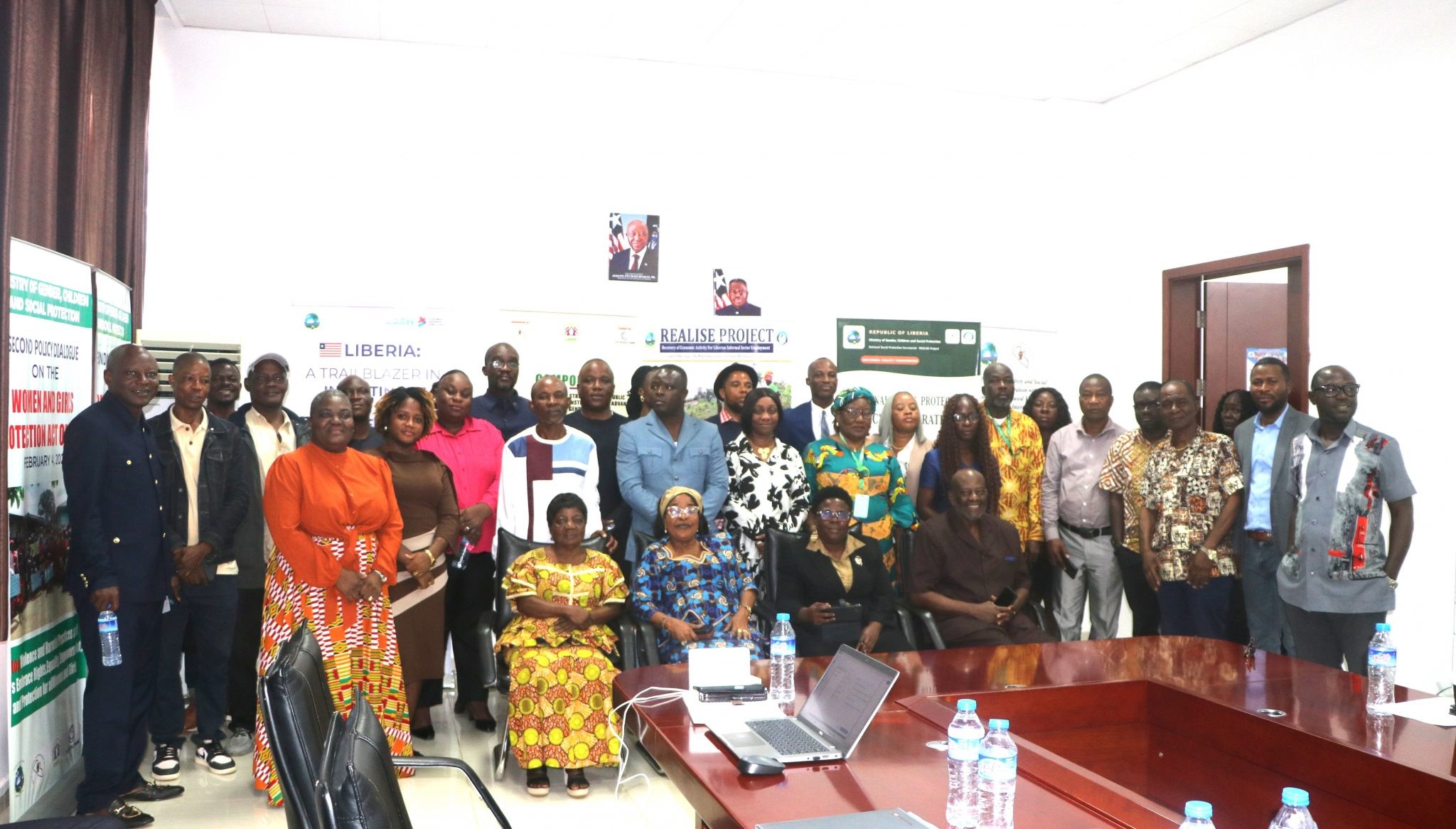
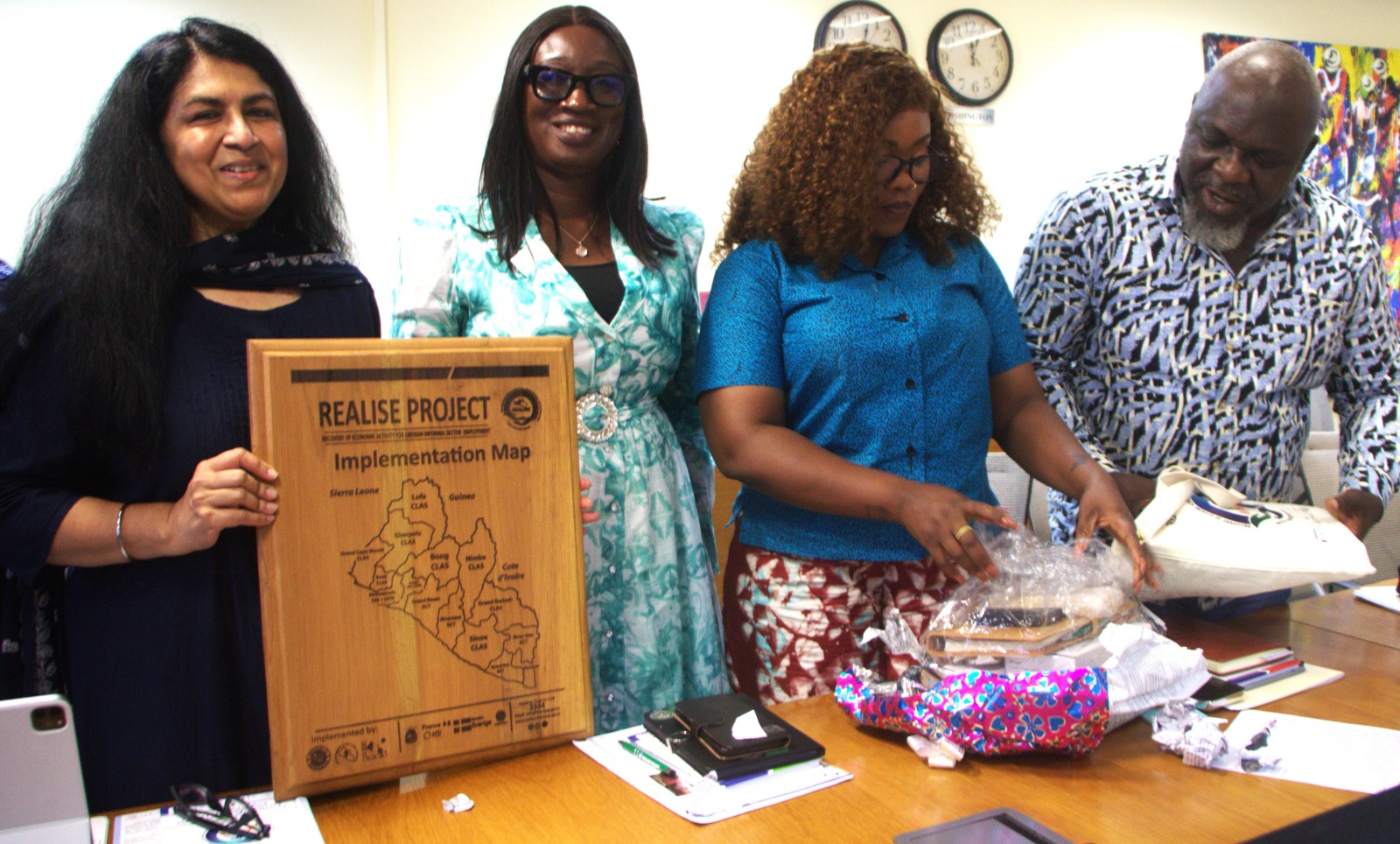
On Wednesday, May 6, 2026, senior officials of the Government of Liberia held a high-level meeting with Madam Trina Haque, Regional Director for Human Development in the Western and Central Africa Region of the World Bank, to present a comprehensive crisis response plan developed through the Recovery of Economic Activities for Liberian Informal Sector Employment (REALISE) Project. The meeting was convened at a moment of acute urgency: Liberia is facing the convergence of two simultaneous shocks — the approach of the lean season, when food stocks run out and hunger peaks between June and September, and the cascading economic impacts of the Middle East crisis, which has driven up the cost of food, fuel, and transport in one of the world’s most import-dependent economies.
The Government’s delegation was led by the three implementing institutions at the heart of the REALISE platform: the Honorable Gbeme Horace-Kollie, Minister of Gender, Children and Social Protection; the Honorable Cornelia Kruah, Minister of Youth and Sports and Chairperson of the REALISE Steering Committee; and Mr. Julius Sele, Executive Director of the Liberia Agency for Community Empowerment (LACE). The crisis response plan was presented to Madam Haque by Mr. Jesse Bengu, Project Coordinator and Mr. Aurelius Butler, National Coordinator for Social Protection.
A Crisis at the Doorstep — and a System Ready to Respond
The crisis response plan drew on evidence from the REALISE Project’s own 2025 baseline field survey and from an independently verified randomized controlled trial of the Social Cash Transfer program, making the case that Liberia is not starting from scratch. Over five years of implementation, the REALISE Project has built one of the most capable social protection delivery systems in West Africa — and that system can be activated to respond to the current crisis within weeks.
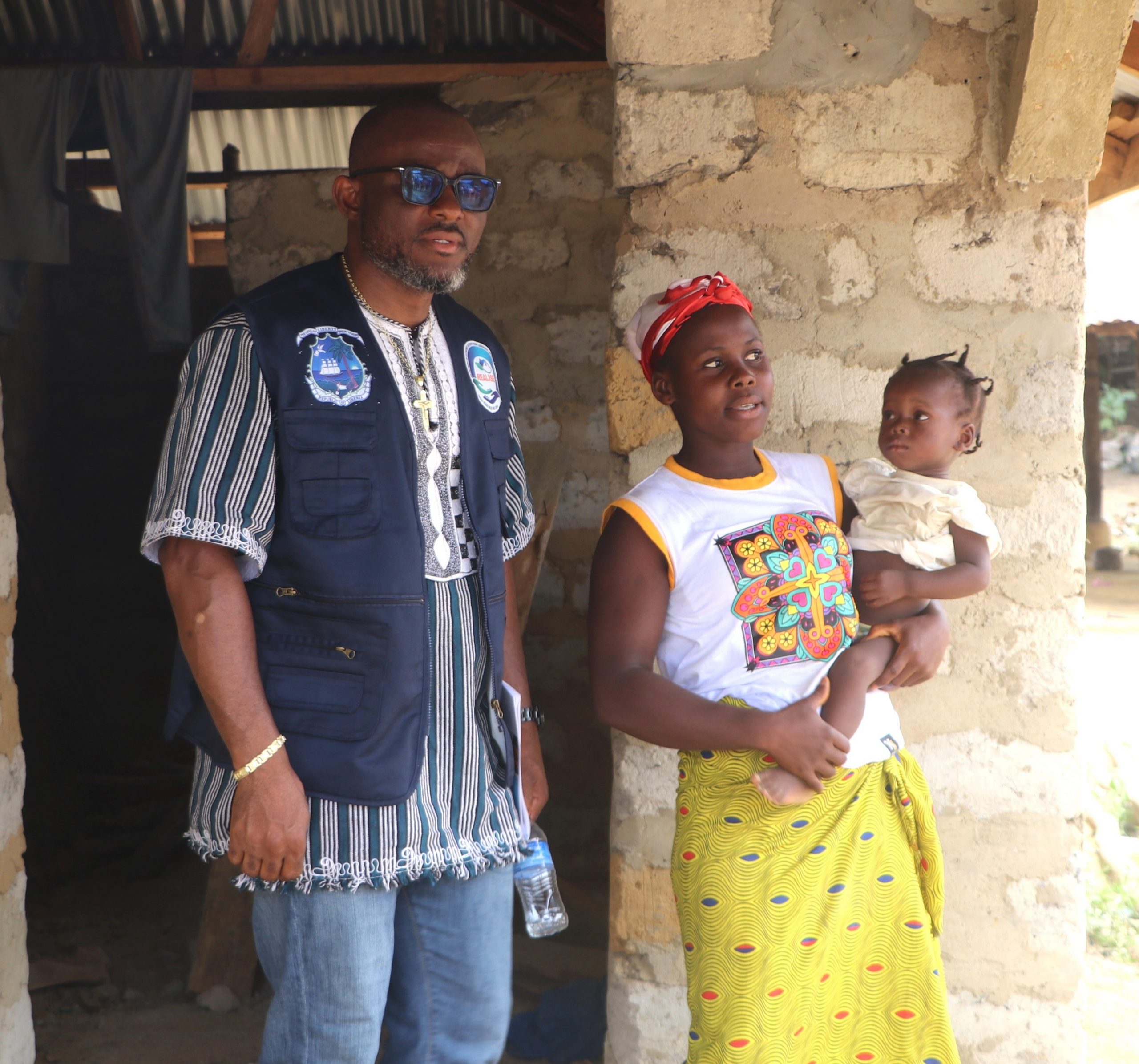
The Liberia Household Social Registry, managed directly by the Ministry of Gender, Children and Social Protection, contains verified and poverty-ranked records for over 442,000 households — 35 percent of the national population. All transfers under REALISE are delivered digitally through MTN mobile money, with every transaction fully traceable and auditable. The project currently operates across 14 of Liberia’s 15 counties, with government field officers and community structures already in place. As officials emphasized in the meeting, the crisis response does not require building new infrastructure — it requires activating what already exists.
The REALISE baseline Food Security and Nutrition data presented to Madam Haque underscored the scale of the challenge. In Nimba County, 99 out of 100 households reported running short of food during the lean season before this year’s price increases. More than 60 percent of rural households across REALISE counties were already cutting back on meals. An estimated 15 percent of stored food is lost to insects, mold, and poor drying practices before families ever eat it. With inflation remaining elevated and a one-percentage-point increase estimated to push approximately 32,000 additional Liberians below the poverty line, the Government presented the convergence of the lean season and the Middle East price shock as an emergency demanding immediate, coordinated action.
The REALISE Crisis Response Plan — Concrete Solutions From Government Institutions
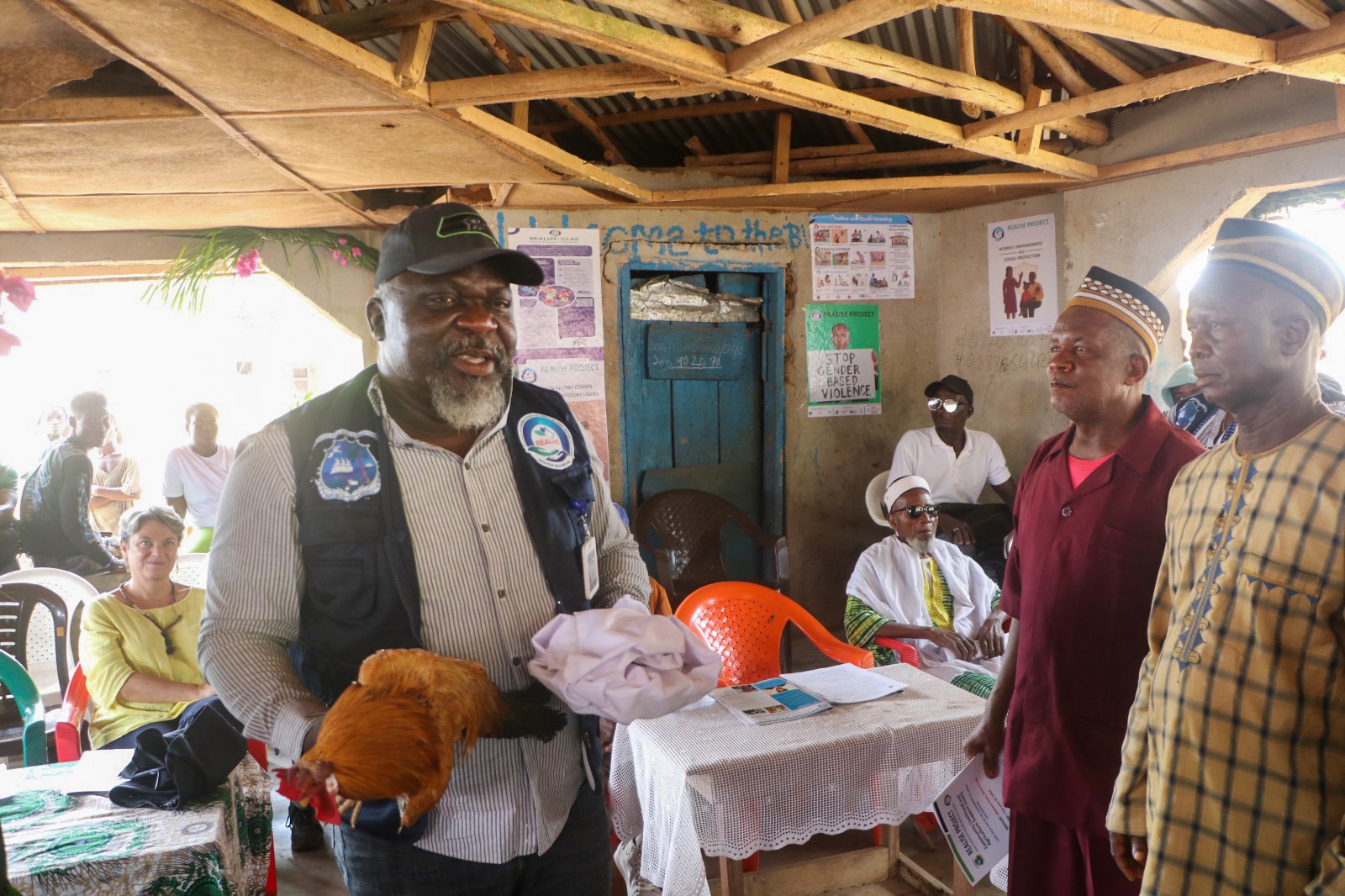
Mr. Butler presented a five-step activation plan that can reach approximately 76,000 of the most vulnerable Liberian households within days of authorization. The plan centers on two proven instruments: the Social Cash Transfer program, through which extremely poor families receive quarterly mobile money payments sized to household need, and the Community Livelihood and Agriculture Support (CLAS) program, which provides farming communities with labor subsidies, farm input grants, and community-managed infrastructure investments.
The immediate response calls for an emergency top-up payment to all 16,525 currently enrolled Social Cash Transfer households, the enrollment of at least 5,000 new households drawn directly from the Social Registry, an increase in labor subsidies and farm input grants across all 735 active CLAS communities, and the deployment of emergency Community Development Support Grants through the 432 Community Oversight Committees already functioning in the field. Food and nutrition value-addition training — teaching families to convert the crops they grow into more nutritious and marketable products — will be integrated into existing community sessions at no additional cost. Geographic expansion to communities adjacent to current CLAS sites will follow in subsequent waves.
Officials were clear that this response will be executed entirely through Liberian government institutions. The Ministry of Gender, Children and Social Protection will lead all Social Cash Transfer operations. LACE will lead all CLAS field operations, with technical support from the Ministry of Agriculture and community governance support from the Ministry of Internal Affairs. The Ministry of Finance and Development Planning holds the critical authorization lever for the first wave of disbursements, and the Ministry of Youth and Sports will continue its leadership as the chair of the REALISE project.
“The REALISE Project has helped ease the household burdens carried by Liberia’s most vulnerable families — particularly women, youth, and low-income households already absorbing the weight of economic hardship. We are not here to describe a problem. We are here to present a solution. The Social Cash Transfer program, the Social Registry, and the digital payment system we have built together with the World Bank give us the capacity to act immediately. We are asking for the authorization and the continued partnership to do so.”
— Minister Gbeme Horace-Kollie, Ministry of Gender, Children and Social Protection
“What makes REALISE different is that it has enabled government and communities to sit together, identify real needs, and design interventions that are owned at the local level. The Community Oversight Committees, the farming groups, and the community development plans that have been built through this project are not external inputs — they are Liberian solutions. Sustaining and expanding this investment is not a request for charity. It is a strategic choice to build on what works, at the moment when it matters most.”
— Minister Cornelia Kruah, Ministry of Youth and Sports and Chairperson, REALISE Steering Committee
“The communities we serve have not stopped needing this support. The progress we have made in strengthening livelihoods and community development represents a foundation worth protecting. Ensuring the continuity of REALISE means ensuring that the gains achieved by thousands of Liberian families are not reversed by a crisis they did nothing to cause.”
— Executive Director, Julius K. Sele, Liberian Agency for Community Empowerment
Evidence-Based Solutions — What the Science Shows
The government’s case was grounded in the findings of a randomized controlled trial of the Social Cash Transfer program — the same scientific standard used to evaluate medicines before approval — conducted in rural Liberia with 2,370 households across 204 communities. The trial found that the cash transfer increased household spending by 45 percent, raised monthly household income by 35 percent, and increased school enrollment among children aged 6 to 15 by 7 percentage points. A light-touch Joint Financial Planning session, costing just $19 per household to deliver, nearly doubled the food security gains achieved by the transfer alone and lifted the income effect to $31 per month — making it among the most cost-effective design features in the program’s toolkit.
The CLAS component has similarly exceeded expectations, reaching 24,255 farming beneficiaries across 735 communities — 50 percent more than originally targeted — while cultivating nearly 15,000 hectares across two production rounds and completing over 430 community-funded infrastructure projects.
Why Social Protection Is the Right Vehicle for This Crisis
The Government’s presentation made a clear case not only for what needs to be done, but why social protection — as delivered through the REALISE platform — is the most effective and rapidly deployable vehicle available to Liberia at this moment. Unlike humanitarian food distribution, which requires supply chains and in-kind logistics that take months to mobilize, the REALISE social protection system can place purchasing power directly in the hands of poor families within days. The Liberia Household Social Registry eliminates the need for new targeting. The MTN mobile money infrastructure eliminates the need for new payment systems. The 735 active CLAS communities and 432 Community Oversight Committees eliminate the need for new field presence. The system is not hypothetical — it is operational, government-owned, and tested at scale.
The REALISE Social Cash Transfer program has been shown in a peer-reviewed randomized controlled trial to increase household spending by 45 percent, raise monthly income by 35 percent, and keep children in school — gains that are especially critical when a price shock simultaneously compresses household budgets and raises the risk that families will pull children out of school or sell productive assets to survive. Social protection does not merely cushion a crisis. Deployed at the right moment, it prevents the destruction of the human capital and household assets that Liberia will need for recovery. That is precisely the moment Liberia is in now.
World Bank Response
Madam Trina Haque acknowledged the significance of the meeting and the strength of the evidence presented. She indicated that she had come to listen and to learn more about the REALISE Project and expressed appreciation for the Government’s clear articulation of both the crisis conditions and the capacity of the social protection system to respond. The discussion underscored the shared commitment of the Government of Liberia and the World Bank to protecting the welfare of the most vulnerable Liberians and to sustaining the gains achieved through the REALISE platform.
About the REALISE Project The Recovery of Economic Activities for Liberian Informal Sector Employment (REALISE) Project is funded by the World Bank, the French Agency for Development (AFD), and the Swedish International Development Agency (Sida). It is implemented jointly by the Ministry of Gender, Children and Social Protection, the Ministry of Youth and Sports, and the Liberia Agency for Community Empowerment. Since becoming effective in 2021, the project has reached over 65,000 beneficiaries across 14 counties through cash transfers, labor-intensive public works, small business grants, and communit